18 May 2026
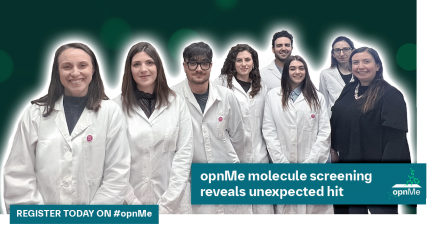
In 2022, we shared our entire “molecule to order” library with 20 scientists across the globe to enable the systematic screening and profiling of novel biological hypotheses relevant to human disease. We recently spoke with one of those winners, Dr. Teresa Gagliano, Associate Professor in Experimental Biology at the University of Udine, Italy, to learn how screening the opnMe molecule library allowed her team to identify an unexpected biological target in an aggressive form of gastrointestinal cancer.
opnMe: Could you please tell us about your research?
Teresa Gagliano: I’m a cancer researcher. I have always focused on possible mechanisms to overcome resistance to therapy and on identifying new putative targets for therapeutic development. I’m working on a subtype of gastrointestinal cancer called neuroendocrine tumors. These tumors are normally indolent and slow‑growing, but they can become aggressive and metastatic. In addition, they are resistant to all conventional cancer therapies and, most importantly, they have a relatively low mutational load. In particular, they do not harbor any driver mutations that could be helpful in treatment design.
opnMe: What role did the opn2SCREEN call (opnMe molecule library) play in your research?
Teresa Gagliano: As I mentioned, neuroendocrine tumors are very difficult to treat, and identifying new molecules that might reduce tumor growth is crucial. I used the opnMe library to perform a drug screening to identify new putative drug targets. This screening identified the SYK inhibitor BI 1002494 as a hit.
We were very surprised, as SYK had not previously been described as having a role in neuroendocrine tumors. We performed several follow-up studies to confirm the data. We also confirmed the expression of SYK both in cell culture and in patient samples1.
This opened a new research project in our lab: identifying the exact role of SYK in mediating cancer cell proliferation.
opnMe: How did Boehringer Ingelheim support your work further?
Teresa Gagliano: Throughout the project, I was always in contact with Boehringer Ingelheim. They were impressively supportive when I asked for more compound and the corresponding negative control.
opnMe: Overall, how did opnMe impact your research?
Teresa Gagliano: opnMe had a huge impact. It helped our group identify a new target that wasn’t previously described as playing a role in tumor progression and response to treatment, which could eventually open new paths for research and, ultimately, for patient therapy.
opnMe: opnMe is currently offering the opn2SCREEN library again. Any message you would like to share with fellow scientists?
Teresa Gagliano: As the opn2SCREEN library contains various classes of molecules modulating different types of cellular processes, it will help you find new perspectives for your research. I want to highlight that the opn2SCREEN library also contains negative controls, which allow you to rule out false positives immediately.
Subscribe to our newsletter to stay updated as we add new calls for proposals to opnMe.com
About opnMe:
opnMe.com, the open science portal of Boehringer Ingelheim, fosters science and collaboration initiatives in areas of high unmet medical need. Our molecules are provided to the scientific community either free of charge as “Molecules to Order” or applied for via scientific research submissions as “Molecules for Collaboration”. With our “opn2EXPERTS” and “techMATCH” programs, we enlist scientific advice on key scientific topics to fuel further drug discovery and deliver novel solutions that benefit unmet patient needs. Our "opn2TALENTS" PostDoc grants at one of our research sites offer opportunities for high-level talents to propose innovative approaches for precisely defined scientific questions.
Reference:
- Ditsiou A., Toffoli L., Vella V., D'Este F., Gagliano T. Spleen tyrosine kinase (SYK) inhibition suppresses growth of gastrointestinal neuroendocrine tumor cells: a pilot study in two cell lines. Cancer Gene Ther. 2025, 32(12):1303-1306. DOI: 10.1038/s41417-025-00979-5.