Complex I - ROS modulator
BI-4500
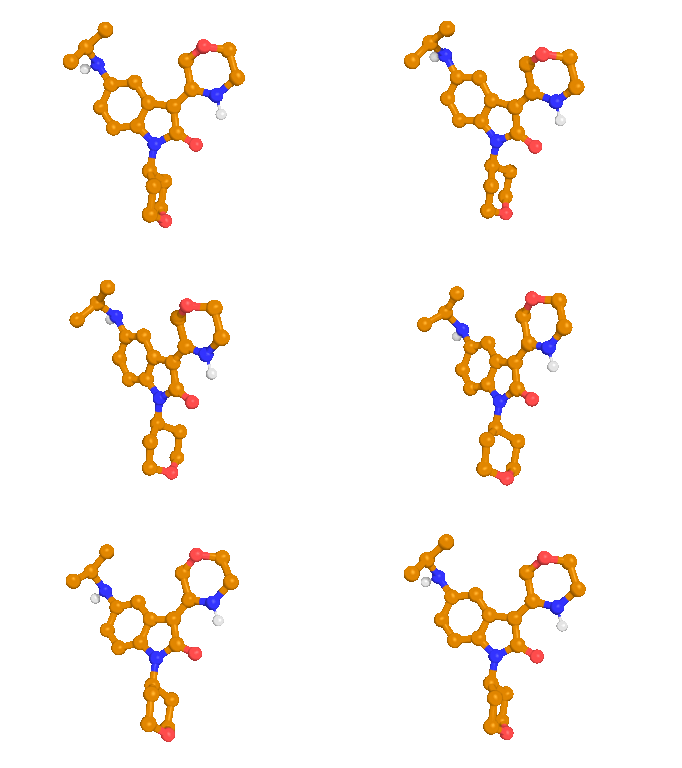
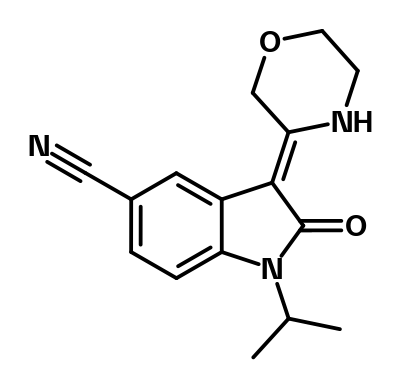
BI‑4500 is a potent and selective NADH:ubiquinone oxidoreductase (Complex I) reactive oxygen species (ROS) modulator that reduces oxidative stress by inhibiting mitochondrial ROS generation. It preserves NADH:ubiquinone oxidoreductase activity, distinguishing it from classical Complex I inhibitors.


More information
Selective inhibitors of mitochondrial Complex I–derived reactive oxygen species (ROS) represent an advanced strategy to control oxidative stress without disrupting essential cellular energy production1-4. Mitochondrial Complex I (NADH:ubiquinone oxidoreductase) is a key component of the electron transport chain and plays a critical role in ATP synthesis. At the same time, it is a major intracellular source of ROS, particularly under conditions of stress or dysfunction, where electron leakage can lead to excessive superoxide formation.
Unlike traditional Complex I inhibitors, which suppress enzymatic activity and impair oxidative phosphorylation, selective ROS modulators act more precisely. They target specific sites within Complex I that are responsible for pathological ROS generation, reducing electron leakage while preserving normal electron flow and ATP production5-6. This selective mechanism allows for the attenuation of oxidative damage without compromising cellular metabolism.
Such compounds are powerful research tools to investigate molecular mechanisms underlying diseases characterized by mitochondrial dysfunction and elevated oxidative stress, including neurodegenerative disorders like Parkinson’s and Alzheimer’s disease, as well as cardiovascular and inflammatory conditions2-5. By lowering ROS levels at their source, these inhibitors may help protect cellular components such as lipids, proteins, and DNA from oxidative damage, thereby preserving tissue integrity and function. In addition, many of these molecules are designed with favorable pharmacokinetic properties, including sufficient stability, tissue distribution, and in some cases, the ability to cross the blood–brain barrier. This brain penetrance is particularly important for targeting central nervous system disorders. Overall, selective inhibitors of Complex I–derived ROS represent valuable research reagents, combining high specificity with a potentially improved safety profile compared to non-specific antioxidants or conventional mitochondrial inhibitors.
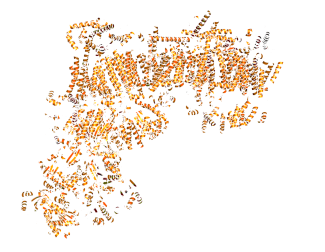
Cryo-EM structure of the multi-subunit Complex-I from human mitochondria (PDB code: 9I4I).
The binding location of BI-4500 is unknown.
BI-4500 inhibits purified bovine Complex I mediated ROS-formation with an IC50 of 80 nM. Compounds from this structural class have been shown to have no species selectivity. The Complex I ROS modulator was also shown to be selective versus other ROS-generating enzymes (e.g. xanthine oxidase, monoamine oxidase and NO-synthases all >10µM) and does not show cytotoxicity at 30 µM in neuroblastoma cells, indicating that mitochondrial respiration is unaffected (modulation concept). Furthermore, the small molecule shows protection of glutathione-depleted neuroblastoma cells in a model of oxidative stress (HT22 cells, EC50 = 80 nM) and dopaminergic neurons in the MPTP-model, a neurotoxin inhibiting mitochondrial Complex I resulting in diminished ubiquinone-reduction and ATP synthesis as well as stimulated ROS-formation.
| Probe name / Negative control | BI-4500 | BI-5330 |
| MW [Da]a | 357.45 | 283.3 |
| Complex I (IC50) (bovine) [nM]b | 80 | >10,000 |
| HT22 cell protection (EC50) [nM]b | 80 | >10,000 |
| Selectivity factor versus Xanthinoxidase (ROS generation) | >100 | - |
a The molecule is supplied in salt form; for the molecular weight of the salt, please refer to the vial label.
b see US2021061761
BI-4500 has acceptable solubility in water at neutral pH and high permeability in Caco2 and MDCK assays.
| Probe name / Negative control | BI-4500 | BI-5330 |
| logD @ pH 7.4 | 2.4 | 0.3 |
| Solubility @ pH 6.8 [µg/mL] | 100 | 8 |
| Caco-2 permeability AB @ pH 7.4 [*10-6 cm/s] | 69.3 | <16 |
| Caco-2 efflux ratio | 0.9 | - |
| MDCK permeability PappAB @ 1µM [10-6 cm/s] | 65 | - |
| MDCK efflux ratio | 0.9 | - |
| Microsomal stability (human/mouse/rat) [% QH] | <23 / 34 / <22 | <66 / 76 / 38 |
| Hepatocyte stability (human/mouse/rat) [% QH] | 18 / - / 41 | - / - / 72 |
| Plasma Protein Binding (human/mouse/rat) [%] | 80 / - / 81 | - |
| hERG IC50 [µM] | > 10 | - |
| CYP 3A4 (IC50) [µM] | 12 | >50 |
| CYP 2C8 (IC50) [µM] | 11 | >50 |
| CYP 2C9 (IC50) [µM] | >50 | >50 |
| CYP 2C19 (IC50) [µM] | 46 | - |
| CYP 2D6 (IC50) [µM] | 19 | >50 |
PK properties in several animal species are suitable for once or twice daily oral dosing of BI-4500 in acute or sub-chronic in vivo experiments. Initial safety studies in rats showed no cardio-vascular effects up to a 50 mg/kg dose.
| BI-4500 | Mousea | Ratb |
| Clearance [% QH]a | 14 | 27 |
| Mean residence time after i.v. dose [h]a | 3.3 | 3.3 |
| tmax [h]b | 1 | 0.8 |
| Cmax [nM]b | 1,420 | 4,452 |
| F [%]b | 100 | 100 |
| Vss [l/kg]a | 2.4 | 3.6 |
a i.v. dose 3.6 mg/kg, p.o. dose 1.5mg/kg
b i.v. dose 3.6mg/kg, p.o. dose 3.6 mg/kg
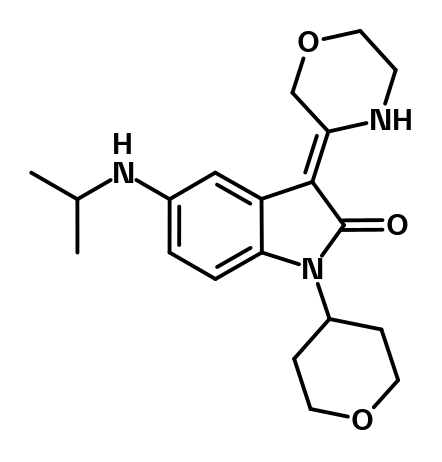
BI-5330 is a structural analog and can be used as a negative control.
BI-5330 which serves as a negative control
BI-4500 showed high selectivity at 10µM versus a panel of receptors. It inhibited 4 out of 85 targets tested in SafetyScreen44TM by ≥ 50% (Free Radical Scavenging, 5-LO, L-peroxidase, 15-LO). 7 targets have an IC50 <1µM in Invitrogen assay (SGKL, PLK3, MAPKAPK3, KDR, IKBKB, FGR, CAMK2A).
Neg. control BI-5330 showed high selectivity at 10µM versus a panel of receptors It inhibited ony 1 out of 43 targets in SafetyScreen44TM by >50% (PDE4D2).
| SELECTIVITY DATA AVAILABLE | BI-4500 | BI-5330 |
SafetyScreen44™ with kind support of  | Yes | Yes |
| Invitrogen | Yes | No |
Download selectivity data:
BI-4500_selectivitydata.xlsx
BI-5330_selectivitydata.xlsx
Mitochondrial DNA Variants of Respiratory Complex I that Uniquely Characterize Haplogroup T2 Are Associated with Increased Risk of Age-Related Macular Degeneration
SanGiovanni J. P., Arking D. E., Iyengar S. K., Elashoff M., Clemons T. E., Reed G. F., Henning A. K., Sivakumaran T. A., Xu X., DeWan A., Agrón E., Rochtchina E., Sue C. M., Wang J. J., Mitchell P., Hoh J., Francis P. J., Klein M. L., Chew E. Y., Chakravarti A.
PLoS One. 2009, 4, 197-201.
When you plan a publication, please use the following acknowledgement:
BI-4500 was kindly provided by Boehringer Ingelheim via its open innovation platform opnMe, available at https://www.opnme.com.