QPCT/L dual inhibitor
BI-3614
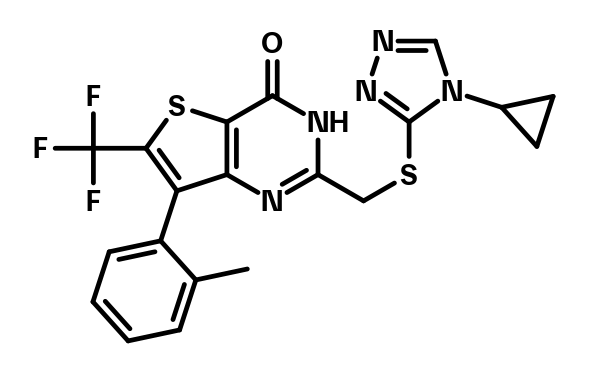
BI-3614 is a potent and highly selective dual QPCT and QPCTL inhibitor suitable for complex in vitro investigations as it shows significantly improved cellular potency of previously described compounds. BI-9692 can be used as negative control.
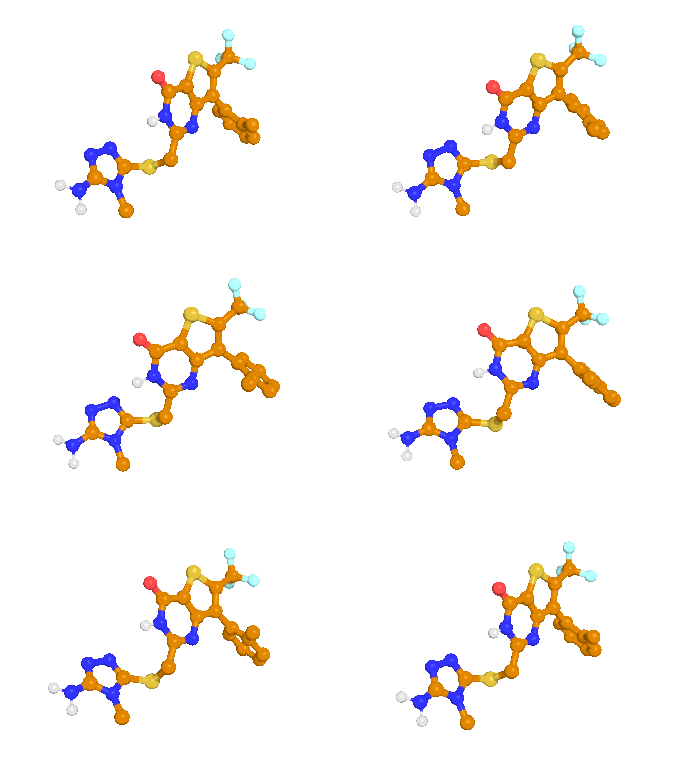


More information
BI-3614 is a potent and highly selective dual QPCT and QPCTL inhibitor1. QPCT and QPCTL are enzymes responsible for the cyclization of N-terminal glutamine (Q) into pyroglutamate (pE)2. QPCT is secreted and plays an important role by stabilization Aß-peptides and thus increased oligomerization and plaque deposition through Q to pE post-translational modification3. QPCTL is Golgi-bound and is reported to catalyze the Q to pE transformation on a diverse set of chemokines, such as CCL24, and fractalkine CX3CL15. Recently, two independent studies identified CD47 as a QPCTL substrate6,7. In this case, the seemingly small pE-modification by QPCTL is essential to establish the protein-protein interaction of CD47 with SIRPa, also known as the “don’t eat me”-signal of tumor cells. Thus, pharmacological inhibition of QPCT and QPCTL has the potential to modulate disease processes across a range of neurological, inflammatory, fibrotic, and oncological indications.
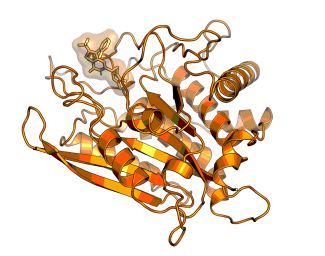
Model of the complex of BI-3614 with QPCTL, based on a co-XRay structure wtih a closely related ligand1
BI-3614 is a potent dual QPCT and QPCTL inhibitor with single-digit nanomolar potency on both enzymes. The compound is also highly potent in cellular assays using either Raji or A549 cells and inhibits the binding of its substrate CD47 to SIRPα. It is cross-reactive on the respective mouse and dog enzymes.
| Probe name / Negative control | BI-3614 | BI-9692 |
| MW [Da]a | 452.5 | 463.5 |
| Human QPCT (IC50) [nM]1 | 2.5 | 1,889 |
| Human QPCTL (IC50) [nM]1 | 4.0 | 3,255 |
| Mouse QPCTL (IC50) [nM]b | 6.3 | 4,738 |
| Dog QPCTL (IC50) [nM]b | 3.7 | 3,384 |
| Cell. CD47/SIRPa Raji Reporter Assay (IC50) [nM]1 | 74 | >10,000 |
| Cell. CD47/SIRPa A549 Reporter Assay (IC50) [nM]8 | 32 | >10,000 |
a The molecule is supplied in salt form; for the molecular weight of the salt, please refer to the vial label.
b Mouse QPCTL and Dog QPCTL enzymatic activity assay was performed analogous to human QPCTL enzymatic activity assay1,8
BI-3614 is an in vitro tool compound with a good solubility at neutral pH, moderate permeability and high stability towards metabolism by microsomal or hepatic pathways.
| Probe name / Negative control | BI-3614 | BI-9692 |
| logD @ pH 2, 11 | 1.7, 0.3 | 3.6, 0.9 |
| Solubility @ pH 6.8 [µg/mL] | 46 | <1.0 |
| Caco-2 permeability ABa @ pH 7.4 [*10-6 cm/s] | 3.3 | 34.0 |
| Caco-2 efflux ratio | 4.2 | 0.6 |
| MDCK permeability PappABb @ 1µM [10-6 cm/s] | 1.2 (PGPc) / 0.1 (BCRPd) | 6 |
| MDCK efflux ratio | 1.8 (PGP) / 21.1 (BCRP) | 3.8 |
| Microsomal stability (human/mouse/rat) [% QH] | <23 / <23 / 24 | 59 / 81 / 73 |
| Hepatocyte stability (human/mouse/rat) [% QH] | 11 / <12 / 16 | 30 / 77/ 84 |
| Plasma Protein Binding (human/mouse/rat) [%] | 99.6 / 98.0 / 99.9 | 99.9 / 99.4 /99.6 |
| CYP 3A4 (IC50) [µM] | 15.7 | 2.5 |
| CYP 2C8 (IC50) [µM] | 16.0 | 20.3 |
| CYP 2C9 (IC50) [µM] | 43.4 | 29.6 |
| CYP 2C19 (IC50) [µM] | >50 | >50 |
| CYP 2D6 (IC50) [µM] | >50 | >50 |
aAB = apical-to-basolateral transport
bPappAB = apparent permeability coefficient in the apical-to-basolateral (AB) transport direction
cPGP = P-glycoprotein (ABCB1) efflux transporter
dBCRP = Breast Cancer Resistance Protein (ABCG2) efflux transporter
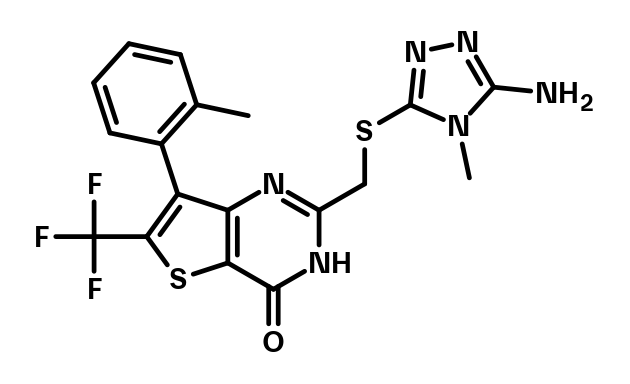
BI-9692, a structurally close analog, can be used as negative control.
BI-9692 which serves as a negative control.
BI-3614 inhibited none of the targets at a concentration of 10 µM to more than 50% in the SafetyScreen44TM or in a 38 kinase-panel at DiscoverX®. Negative control BI-9692 did not show inhibition of any of the targets in the 38 kinase-panel at DiscoverX® and showed inhibition of 2 out of 44 tested targets in the SafetyScreen44TM by greater than 50% @ 10µM (KAPPA(KOP): 66% and MU/H: 71%).
| SELECTIVITY DATA AVAILABLE | BI-3614 | BI-9692 |
SafetyScreen44™ with kind support of  | Yes | Yes |
| DiscoverX® | Yes | Yes |
Download selectivity data:
BI-3614_selectivitydata.xlsx
BI-9692_selectivitydata.xlsx
Commercially available QPCT/L inhibitors such as varoglutamstat9 or SEN-17710 show significantly inferior cellular potencies (IC50>1 µM). Another recently described QPCT/L inhibitor QP-5038 with improved cellular potency is now commercially available11.
First time disclosure at “Highlights in Medicinal Chemistry IV” meeting on Oct 8, 2026, London
Glutaminyl cyclase inhibition attenuates pyroglutamate Abeta and Alzheimer's disease-like pathology
Schilling S., Zeitschel U., Hoffmann T., Heiser U., Francke M., Kehlen A., Holzer M., Hutter-Paier B., Prokesch M., Windisch M., Jagla W., Schlenzig D., Lindner C., Rudolph T., Reuter G., Cynis H., Montag D., Demuth H.‑U., Rossner S.
Nat Med 2008, 14(10), 1106–1111.
The isoenzyme of glutaminyl cyclase is an important regulator of monocyte infiltration under inflammatory conditions
Cynis H., Hoffmann T., Friedrich D., Kehlen A., Gans K., Kleinschmidt M., Rahfeld J.‑U., Wolf R., Wermann M., Stephan A., Haegele M., Sedlmeier R., Graubner S., Jagla W., Müller A., Eichentopf R., Heiser U., Seifert F., Quax P. H. A., Vries M. R. de, Hesse I., Trautwein D., Wollert U., Berg S., Freyse E.‑J., Schilling S., Demuth H.‑U.
EMBO Mol Med 2011, 3(9), 545–558.
Glutaminyl cyclase is an enzymatic modifier of the CD47- SIRPα axis and a target for cancer immunotherapy
Logtenberg M. E. W., Jansen J. H. M., Raaben M., Toebes M., Franke K., Brandsma A. M., Matlung H. L., Fauster A., Gomez-Eerland R., Bakker N. A. M., van der Schot S., Marijt K. A., Verdoes M., Haanen J. B. A. G., van den Berg J. H., Neefjes J., van den Berg T. K., Brummelkamp T. R., Leusen J. H. W., Scheeren F. A., Schumacher T. N.
Nat Med 2019, 25(4), 612–619.
Piperidinylpyridinylcarbonitrile derivatives as inhibitors of glutaminyl-peptide cyclotransferase and glutaminyl-peptide cyclotransferase like protein
Willwacher J., Binder F., Dahmann G., Yang Hamilton, J., Handschuh S., Reindl S.
2024, WO 2024028245.
Varoglutamstat: Inhibiting Glutaminyl Cyclase as a Novel Target of Therapy in Early Alzheimer's Disease
Feldman H. H., Messer K., Qiu Y., Sabbagh M., Galasko D., Turner R. S., Lopez O., Smith A., Durant J., Lupo J.‑L., Revta C., Balasubramanian A., Kuehn-Wache K., Wassmann T., Schell-Mader S., Jacobs D. M., Salmon D. P., Léger G., DeMarco M. L., Weber F.
J Alzheimers Dis 2024, 101(s1), S79-S93.
When you plan a publication, please use the following acknowledgement:
BI-3614 was kindly provided by Boehringer Ingelheim via its open innovation platform opnMe, available at https://www.opnme.com.